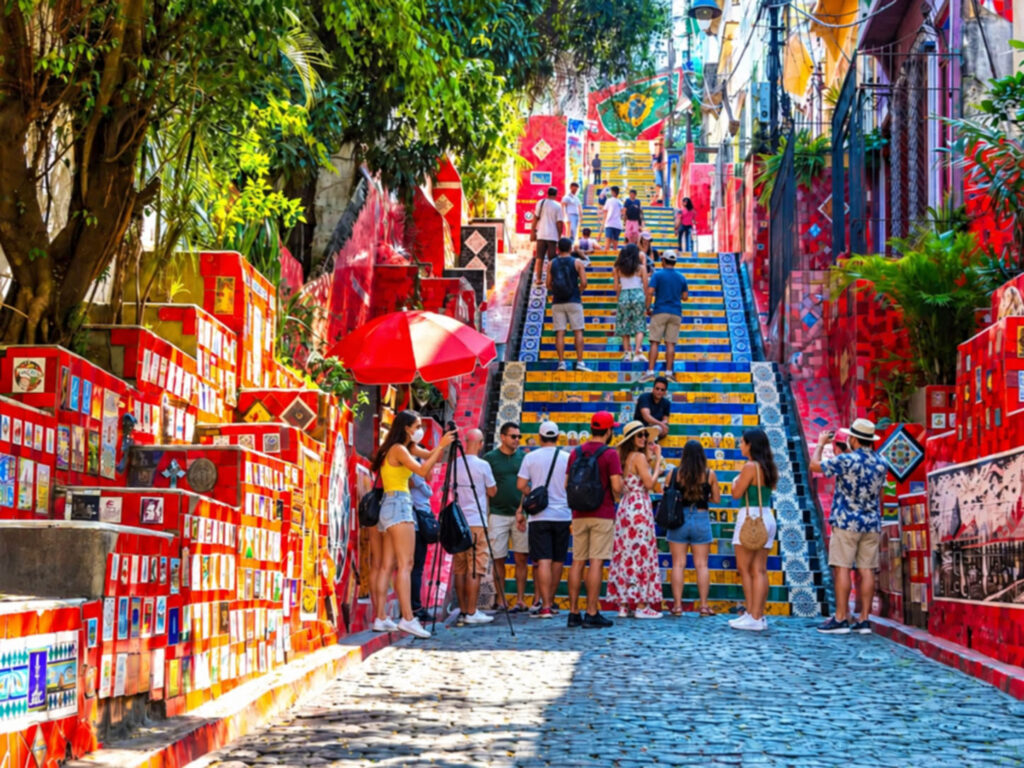
In Rio, saying that you are staying in Copacabana is not quite specific enough. A few blocks can change how easily you reach Ipanema, whether the metro is useful, how comfortable the walk home feels after dark and, for the Lonely Punter reader, whether your accommodation turns out to be considerably less flexible than expected. That is a good introduction to Rio in general. The city looks simple in photographs because the beaches, buildings and mountains fit beautifully into the same frame, but those mountains divide neighbourhoods, traffic funnels through tunnels and areas that seem close on a map do not always work as part of the same evening. Rio is also less forgiving of careless street habits than Bangkok or Pattaya, although there is no reason to turn that fact into a week-long security exercise. Get the base right, understand when to walk and when to call a car, and most of Rio becomes much easier.
For a First Visit, Aim for Posto 5 or Posto 6
For a solo traveller, my first choice would be the Posto 5 and Posto 6 end of Copacabana, toward Arpoador and Ipanema. It gives you the advantages of Copacabana without isolating you from the more polished restaurants, bars and evening atmosphere of Ipanema. During the day the beach is outside the door, Arpoador is close enough for an easy sunset walk and at night you have several different versions of Rio within a relatively small area.
If the budget allows, Avenida Atlântica gives you the classic beachfront location and the busiest surroundings. One block inland, Rua Aires Saldanha is particularly useful because it remains close to the beach while feeling slightly removed from the constant traffic of the promenade, with plenty of restaurants and activity around it. Rua Miguel Lemos is another strong reference point and gives direct access to Cantagalo metro station, while Rua Joaquim Nabuco works particularly well if being close to Arpoador and Ipanema matters more than being beside that particular metro entrance. This part of Copacabana also gives you an unusually useful balance between beach, metro, nightlife and access to the adult side of Rio.
Posto 2 and Posto 3 Are the Main Alternative
The area around Posto 2 and Posto 3, closer to the Copacabana Palace, has a different appeal. It feels more old-school and monumental, with the grand hotels, traditional churrascarias, botecos and a very recognisable version of classic Copacabana. Cardeal Arcoverde and Siqueira Campos metro stations also make the rest of the city straightforward to reach. For the typical Lonely Punter first trip, however, I would still favour Posto 5 and 6 because the southern end gives you easier access to Arpoador and Ipanema and, in practice, a wider variety of evenings without requiring transport every time.
Leme, around Posto 1, is attractive and more residential but generally too quiet and slightly too removed from the areas I would prioritise for a first solo visit. I would also be cautious about booking several blocks inland toward the hills simply because the room is cheaper. Staying within roughly the first two or three blocks of the beach usually makes everyday movement easier and means returning through busier streets after dark. You can find more detailed accommodation comparisons in Where to Stay.
Check the Guest Policy Before You Book
For the Lonely Punter reader, hotel location is only half of the accommodation question. Visitor policies vary considerably between properties, and some Rio hotels are strict about unregistered guests, require identification at reception or charge additional fees. If being able to bring someone back to the room matters, ask the hotel before paying for a non-refundable booking rather than assuming that a four-star property in the perfect location will automatically have the policy you want.
A private apartment can offer considerably more freedom, but Airbnb is not a magic phrase that removes building rules. Condominium security may still require visitor identification or impose its own access procedures, so confirm the arrangements with the host in advance. This is one of those details mainstream accommodation guides often overlook because for most travellers it makes no difference. For this audience it can turn an apparently perfect hotel into a remarkably expensive place to sleep alone.
Understand the Zona Sul Before Exploring the Rest
Copacabana belongs to the Zona Sul, the part of Rio containing Ipanema, Leblon, Botafogo, Flamengo and several of the neighbourhoods a first-time visitor is most likely to use. For practical purposes, much of your trip will probably happen here even though this is not Rio’s historic city centre. Centro lies farther north and contains historic Rio, museums, churches, offices and the revitalised port, while Lapa beside it becomes one of the city’s major nightlife areas after dark. Santa Teresa rises into the hills above them, and Barra da Tijuca extends far to the west beyond the main tourist geography.
The important point is not memorising the whole city. Think in neighbourhoods and build parts of the day around them rather than repeatedly crossing Rio because somebody online produced a list of attractions without looking at a map.
Galeão Is Usually the First Practical Problem
Most long-haul international travellers arrive at RIOgaleão, GIG, which sits well outside Copacabana and Ipanema, and traffic determines the journey more than distance does. For a first arrival with luggage, an official taxi or Uber is normally the simplest solution. Designated taxi and ride-hailing pickup areas exist at the airport, so there is little advantage in improvising with somebody offering transport in the arrivals hall. Public transport options may make sense when price is the priority, but the details belong in Getting Around rather than turning the first hour in Brazil into a practical examination.
Santos Dumont, SDU, is completely different. It sits beside Centro and is exceptionally convenient for many domestic journeys, so you may use it if Rio is part of a longer Brazil trip. Always check the airport code before making plans because GIG and SDU create very different arrival days.
The Metro Is Excellent When Your Journey Fits the Metro
Rio’s metro does not cover the entire city, but it covers an unusually useful portion of what a first-time visitor actually needs. Copacabana, Ipanema, Botafogo, Flamengo and Centro all sit on the network, and the Line 1/4 corridor continues west through São Conrado to Jardim Oceânico. This makes it especially valuable during the day because from Cantagalo you can reach other parts of the Zona Sul or Centro without volunteering to sit in traffic, while contactless card payment makes the system straightforward for visitors.
The metro does not solve Cristo Redentor, Sugarloaf, Santa Teresa or every nightlife journey. Rio works best when you stop asking one transport system to solve the whole city: metro when the route fits, Uber when it does not. You can find the practical details in Getting Around.
Walking Works Brilliantly Until It Suddenly Does Not
Posto 5, Posto 6, Arpoador and Ipanema make an excellent walking environment. Much of Copacabana is similarly easy, and moving along the beachfront is part of experiencing the city rather than simply getting somewhere. The mistake is applying that logic everywhere. Rio’s hills, tunnels, major roads and abrupt changes in street environment make straight-line distance a poor measure of whether a route is sensible, and a destination twenty minutes away on foot may be easier and more comfortable as a very cheap car journey.
This becomes more important after dark. If you leave a restaurant or bar and the route back involves quiet streets, dark sections of beachfront or several blocks without much activity, call an Uber. There is very little merit in saving the price of a short ride while carrying a phone, cards and whatever judgement remains after several caipirinhas.
Do Not Walk the Dark Beach at Night Just Because the Hotel Is Close
Copacabana’s promenade can remain active late, but the sand itself is not the route I would choose once the beach becomes dark and empty. The same applies to quiet inland streets simply because your destination is only three blocks away. Rio is a city where convenience is often inexpensive enough to buy, and a short ride-hailing trip can take you directly from a venue to the building entrance.
This should not produce paranoia. Busy streets full of people are different from an empty block at two in the morning. The useful skill is not avoiding Rio after dark, but noticing the difference.
The Beach Is Part of the Day, Not an Attraction to Tick Off
Copacabana and Ipanema are neighbourhood beaches used continuously by the city. If you stay nearby you will probably cross them for morning walks, swimming, drinks, sunset or simply because spending an hour beside the Atlantic seems preferable to the attraction you had planned. The numbered postos, or lifeguard stations, are useful landmarks and different parts of the beaches develop slightly different crowds. Vendors make chairs, umbrellas, drinks and food easy to arrange without bringing much with you.
That last point is useful for another reason: do not take unnecessary valuables onto the sand. Bring what you need, keep track of it and do not leave a phone and wallet unattended because the water looks inviting. The Atlantic can also be much rougher than a famous urban beach might suggest, so warning flags and lifeguards deserve more authority than the fact that somebody else is already swimming.
Copacabana and Ipanema Are Different Trips Within Walking Distance
Copacabana is larger, denser, noisier and more theatrical. Avenida Atlântica provides a continuous mixture of kiosks, tourists, residents, vendors, runners, hotels and people beginning or ending evenings that have nothing to do with the sea. Ipanema feels wealthier, more composed and somewhat more sophisticated, with restaurants and bars generally leaning more polished, while Leblon continues the same direction farther west. Arpoador sits between the two neighbourhoods and turns sunset into something close to a daily civic ritual.
This is exactly why Posto 5 and 6 work so well as a first base: you do not need to choose one version of Rio for the whole trip.
Mainstream Nightlife Matters More Here Than the Adult Scene
Rio is very different from Pattaya in this respect. It has a substantial commercial adult scene, but nightlife does not orbit around it. Lapa remains one of the major reference points for samba, live music and busy weekend streets, Botafogo has an enormous bar scene and attracts a much more local, often younger crowd, Ipanema and Leblon provide restaurants, cocktails and more polished nights, while Copacabana combines beach kiosks, conventional bars, live music, clubs and the adult side of the city.
This creates a social environment where assuming every interaction is commercial will make you look fairly ridiculous. Women go out with friends, people meet naturally and ordinary Brazilian nightlife is an important part of Rio’s appeal. Commercial company exists, sometimes very openly, but it overlaps with normal social life rather than replacing it. More detailed conventional nightlife coverage belongs in Nightlife.
Rio’s Adult Scene Does Not Come With a Walking Street
For the Lonely Punter reader, Copacabana is the main reference point, but do not expect one neon strip containing every adult venue in the city. Rio has a longstanding freelancer culture, massage venues, clubs and the particularly Brazilian termas format, traditionally combining sauna or spa-style facilities, bar areas and a commercial adult environment.
The existing Things to Do and See in Rio de Janeiro guide already introduces this side of the city without turning the sightseeing article into an adult directory. The practical mechanics, current venues, prices, etiquette and differences between termas, freelancers and other formats belong in After Dark. The first-time lesson is simply that Rio’s punter scene is more dispersed and less visually obvious than Bangkok or Pattaya. You need to understand how it works rather than merely locating the street with the brightest signs.
A Little Portuguese Goes a Long Way
Rio receives international visitors constantly, but English is not something I would assume will solve every interaction. Hotels and major attractions are one thing; drivers, smaller restaurants, bars, shops and casual conversations are another. Basic Portuguese makes the city easier and, for a solo traveller interested in social nightlife, noticeably more interesting. You do not need fluency, but learning a few practical phrases and downloading offline Portuguese in your translation app before arriving is worthwhile.
Spanish may help with individual words, but speaking Spanish slowly at somebody is not the same thing as speaking Portuguese. The two languages are similar enough to create confidence considerably faster than understanding.
Do the Famous Viewpoints When Rio Decides to Show You the View
Cristo Redentor and Sugarloaf deserve their reputation, but visibility matters more than the date you assigned them three months earlier. Cloud can hide Corcovado completely and weather changes quickly enough that a clear morning is sometimes worth reorganising the day around.
The existing Things to Do and See in Rio de Janeiro guide already covers Cristo, Sugarloaf, Santa Teresa, Centro, Tijuca, Maracanã and the other major attractions in detail. A First Time guide only needs to establish that sightseeing here benefits from flexibility rather than obedience to a spreadsheet.
Centro Is a Daytime Destination Before It Is a Nighttime Shortcut
Rio’s historic centre deserves proper time. Churches, museums, colonial buildings and major cultural institutions give you a version of the city that has very little to do with Copacabana Beach, but the area changes considerably after office hours. Streets that are crowded during the business day can become remarkably quiet later, and although Lapa develops its own nightlife nearby, that does not mean every route through Centro becomes part of the party.
Visit Centro deliberately during the day. Visit Lapa deliberately when you want Lapa. At night, use transport rather than improvising scenic shortcuts through empty streets.
Do Not Follow Google Maps Blindly Into the Hills
Rio’s geography places formal neighbourhoods and favelas remarkably close together, and a road that looks like an ordinary continuation on the map can lead somewhere a first-time visitor has very little local context. Favelas are residential communities, not automatically forbidden areas and not automatically attractions, and conditions vary enormously. If you genuinely want to visit one, use somebody with current local knowledge rather than wandering uphill because a map has discovered a shortcut.
The broader lesson applies everywhere: Rio is a city where knowing the neighbourhood matters more than trusting the geometry.
Rio Requires Street Awareness, Not Fear
Copacabana and Ipanema are busy tourist neighbourhoods with large numbers of visitors and visible policing, but phone theft, pickpocketing and opportunistic robbery are real enough to justify changing a few habits. Avoid walking with your smartphone permanently in your hand. If you need to study a map, step into a shop, café or building entrance rather than standing beside the road absorbed in the screen. Leave expensive watches and conspicuous jewellery at home and carry what you need rather than your entire financial life.
The idea is not to disguise yourself as a Carioca by purchasing the correct flip-flops. It is simply to avoid advertising valuables unnecessarily. Casual clothes, a little awareness and an Uber when the street feels wrong accomplish much more than spending the trip looking nervous.
Solo Travellers Should Know the Phrase “Boa Noite, Cinderela”
This deserves explicit mention because Lonely Punter readers are more likely than the average package tourist to meet strangers through nightlife or dating apps. Boa Noite, Cinderela is the Brazilian expression commonly used for drugging someone before robbing them, and cases involving visitors and app-arranged meetings are real enough that the risk should not be reduced to a generic “watch your drink” warning.
The precautions are straightforward. Meet new people somewhere public first, maintain control of your own drink and be cautious about suddenly changing location with people you have only just met. Lock banking apps properly and do not carry large quantities of cash. This is not an argument for distrusting everyone you meet in Rio; it is simply a risk specific enough to this audience that pretending it does not exist would be bad travel advice.
Cards Are Easy, but Keep a Backup
Brazil is extremely comfortable with electronic payments. Contactless cards work in a huge range of businesses, while Pix QR codes are everywhere in Brazilian daily life. A short-term foreign visitor does not necessarily need Pix, because whether you can use it conveniently depends on the financial services available to you, while an international Visa or Mastercard normally solves most tourist purchases without difficulty.
Take two working cards and keep them separately, plus a modest amount of reais. Carrying every card and a large quantity of cash in the same wallet is an impressively efficient way of turning one theft into several problems. More detailed payment information belongs in Travel Essentials.
Rio Is Easy to Eat Well Without Scheduling Every Meal
Rio’s everyday food culture is much broader than churrasco and feijoada. Botecos, padarias, juice bars, kilo restaurants, salgados, seafood and simple grilled meat make it unusually easy to find something decent without turning every meal into research. Botafogo has developed a particularly strong restaurant and bar scene, while Copacabana and Ipanema offer everything from inexpensive neighbourhood places to expensive destination restaurants.
A bakery can solve breakfast, a kilo restaurant can solve lunch and a boteco can accidentally solve most of the evening. You can find the detailed food coverage in Food & Drink.
Carnival and Réveillon Need Their Own Planning
Rio during an ordinary week and Rio during Carnival or Réveillon are effectively different logistical environments. Copacabana becomes the centre of one of the world’s largest New Year celebrations, while Carnival blocos change traffic and movement across entire neighbourhoods. Accommodation becomes more expensive, transport arrangements change and streets that normally work in one way may be closed or filled with thousands of people.
If your dates coincide with either event, research that event specifically rather than applying a normal Rio itinerary and hoping the extra million people fit around it.
Do Not Overplan Rio
Rio already provides enough variables without adding an hourly itinerary. Weather affects the viewpoints, traffic affects journeys, beaches change with conditions and a good afternoon in Ipanema can quite reasonably destroy whatever you intended to do at four o’clock. Give days geographical logic instead: Copacabana, Arpoador and Ipanema work naturally together, Centro has its own day, Botafogo can become an afternoon that turns into an evening, and Cristo or Sugarloaf deserve flexibility around visibility rather than obedience to a spreadsheet.
The existing Things to Do guide gives you more than enough sightseeing possibilities. Rio rarely improves because somebody tried to complete all of them before Friday.
What Is Actually Worth Sorting Out Before You Arrive?
Check the current Brazilian entry requirements for your nationality, book accommodation in the right part of Copacabana, know whether your flight lands at GIG or SDU and make sure your phone will have data immediately. Install the ride-hailing apps you intend to use, bring at least two working payment methods and, if visitor flexibility matters, confirm the accommodation’s guest policy before booking, not after meeting someone.
For the typical Lonely Punter first trip, Posto 5 or Posto 6 is the starting point I would choose, preferably close to the beachfront and no more than a few blocks inland. The rest of the city becomes much easier to explore once your default base already works.
The Main Thing to Understand on a First Trip
Rio can deliver the kind of trip people imagine before they arrive: spectacular beaches, mountains, nightlife, social energy and more attractive people than seems administratively necessary. It simply demands a little more attention to geography and street habits than many Asian destinations. Stay in the right part of Copacabana and you can walk to the beach, Arpoador and Ipanema while keeping the metro, conventional nightlife and adult side of Rio within easy reach. Use cars freely at night when the alternative is a quiet walk, learn enough Portuguese to make interaction easier and remember that Rio’s commercial adult scene exists inside a much larger social nightlife culture rather than replacing it.
The city does not need to feel dangerous, and it does not need to feel complicated. It does need you to notice where you are. Once that becomes automatic, Rio starts making a lot more sense.