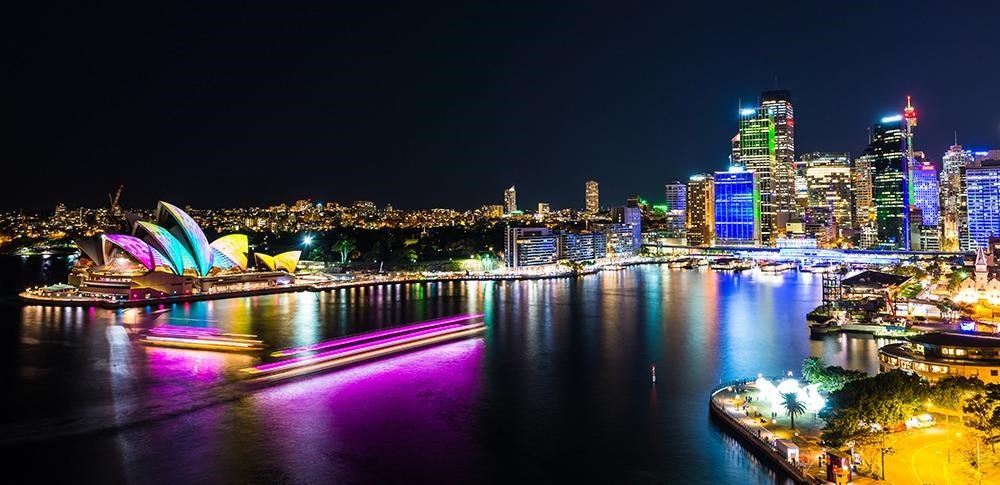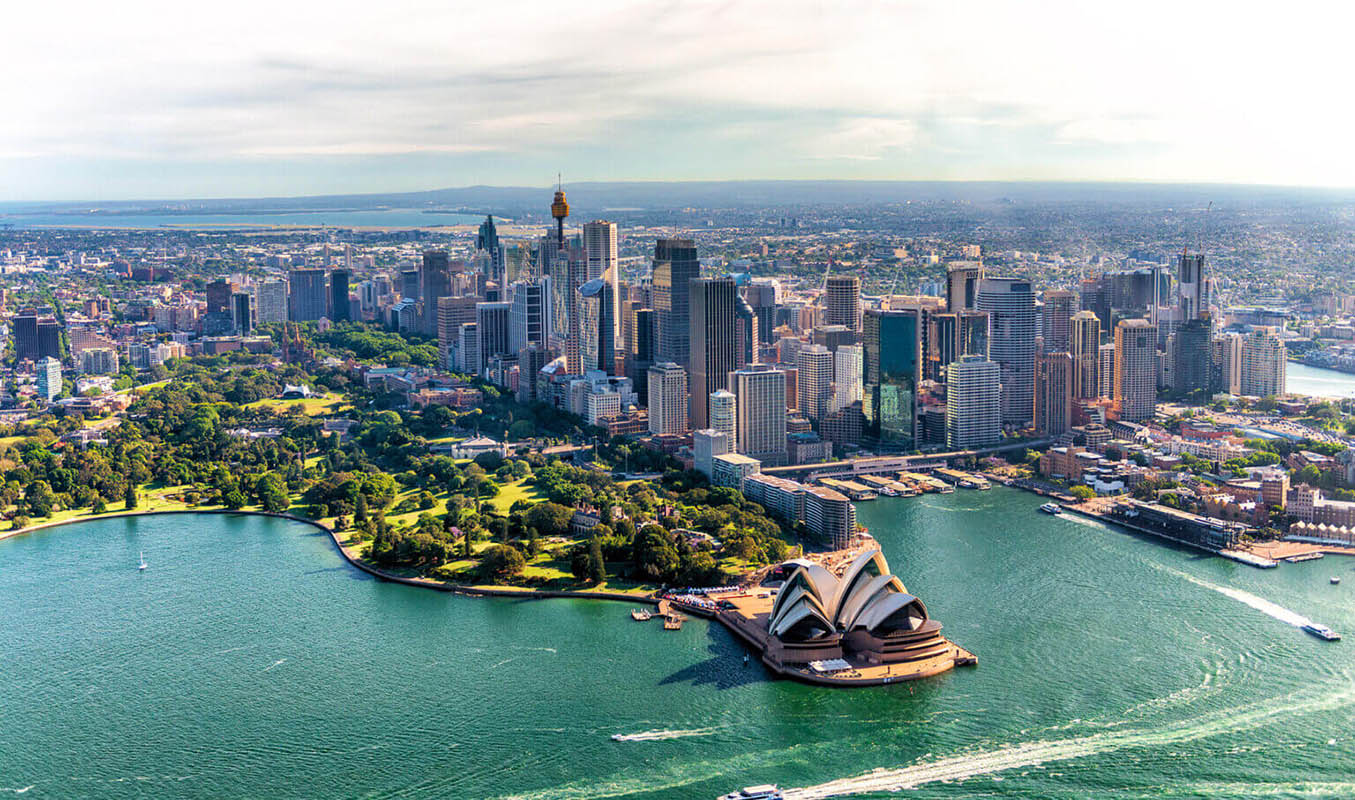
Sydney has a habit of fitting everything into the same photograph. The Opera House, Harbour Bridge, water, skyscrapers and occasionally even a beach seem to suggest a city where everything important sits conveniently around one spectacular bay. On the ground, Sydney behaves more like several cities stitched together by rail lines, ferries and a coastline that rarely takes the shortest route anywhere. Circular Quay is the visual centre, Bondi is nowhere near a train station, Manly sits across the harbour, and some of the best areas for eating and going out are south and east of the places most first-time visitors recognise.
For a solo traveller, choosing the right base matters more than trying to sleep beside whichever landmark appeared on the flight search page. The useful question is whether you want the harbour, the beach or a central position that keeps sightseeing, food and nightlife reasonably close together. For the typical Lonely Punter first visit, I would choose the third.
For a First Visit, Look Around Town Hall, Museum and Hyde Park
My first choice would be the southern and eastern side of the CBD around Town Hall, Museum Station and Hyde Park. Roughly speaking, the area between Town Hall, World Square, Museum and the southern end of Hyde Park gives you trains, light rail nearby, airport connections, Chinatown and Haymarket immediately south, Darling Harbour within walking distance and easy access to Surry Hills, Darlinghurst and Oxford Street at night.
It is not Sydney’s most romantic hotel location, but that is part of the appeal. Circular Quay and the Opera House are still straightforward to reach, while several neighbourhoods you may actually use for dinner or nightlife are considerably closer. In Sydney, the best place to photograph and the best place to sleep are not necessarily the same postcode.
Circular Quay Is the Postcard Centre, Not Automatically the Best Base
Staying around Circular Quay or The Rocks makes perfect sense if harbour views are a major part of the trip. You can walk to the Opera House, cross into The Rocks and use the city’s main ferry hub almost from the hotel door. The trade-off is price and a location weighted more heavily toward sightseeing, restaurants and the harbour than toward the broader nightlife geography.
Staying around Town Hall or Hyde Park does not mean sacrificing the harbour. It usually means travelling a few minutes to see it while gaining much easier access to the southern CBD and inner-eastern suburbs. For a first solo trip, I would normally rather visit Circular Quay repeatedly than pay a large premium merely to sleep beside it.
Surry Hills, Darlinghurst and Potts Point Are the Main Alternatives
If restaurants, bars and neighbourhood life matter more than being in the middle of the CBD, Surry Hills and Darlinghurst become very attractive. Crown Street and the surrounding area combine restaurants, cafés, pubs and small bars, while Oxford Street gives Darlinghurst a stronger nightlife identity. Both remain close enough to central Sydney that the city rarely feels inconvenient.
Potts Point is another interesting alternative, particularly for someone expecting to go out regularly. It has cafés, restaurants, bars, smaller hotels and Kings Cross station nearby, while feeling more residential than the CBD. What I would not do is choose Kings Cross solely because an old guidebook describes it as Sydney’s red-light district. That version of the neighbourhood has changed considerably.
Bondi Is a Beach Base, Not a Sydney Base
Bondi is a superb place to stay if the beach is the point of the trip. It is less convincing if every day also involves Circular Quay, the CBD, Surry Hills or nightlife elsewhere because Bondi Beach has no train station. Trains reach Bondi Junction and buses continue to the coast, a perfectly workable system that becomes much more noticeable when you repeat it twice a day.
The same general principle applies to Manly. It has beaches, restaurants, pubs and enough local life to work almost as a destination in its own right, with the bonus of one of the world’s better commuter ferry journeys. For a first visit intended to explore Sydney as a whole, however, I would stay centrally and treat Bondi and Manly as deliberate beach days rather than default starting points.
Sydney Is Becoming a Two-Airport City
For decades, Sydney Airport meant Sydney Kingsford Smith, SYD, at Mascot, unusually close to the centre for a major international airport. Trains run directly toward Central and the CBD, making arrival straightforward if your hotel is around Museum, Town Hall or another central station.
From 25 October 2026, Sydney gains a second major passenger airport when Western Sydney International, WSI begins operations. WSI sits far west of the city and initially has no direct rail connection, so it should not be treated as another terminal of SYD. If your ticket says WSI, that changes the transfer calculation substantially. Checking the airport code has therefore gone from unnecessary Sydney trivia to useful travel planning.
The Airport Train Is Fast, but Not Particularly Cheap
From SYD, rail is usually the simplest option for a solo traveller with manageable luggage, but the airport stations charge an additional access fee on top of the normal train fare. It therefore costs considerably more than an ordinary suburban rail journey, and that extra charge does not behave exactly like normal capped Opal spending.
For one person staying beside the rail network, the train still wins easily on simplicity. With several passengers or accommodation awkwardly positioned from a station, a taxi or rideshare becomes more competitive than the phrase “airport train” might suggest. The detailed fare calculations belong in Getting Around.
You Probably Do Not Need an Opal Card
Sydney’s transport system is easy for short-term visitors because contactless bank cards and mobile wallets work across trains, metro, buses, ferries and light rail. Adult passengers using an eligible card receive the standard adult fares and normal fare benefits, so buying an Opal card is no longer necessary for most visitors.
The important detail is consistency. Tap on and off with the same card or the same device, because a physical card and the copy stored in your phone can be treated as different payment methods. Sydney transport is simple enough that inventing your own fare complications would be an unnecessary contribution.
Ferries Are Public Transport With Unreasonably Good Scenery
Sydney’s ferries are not merely tourist boats pretending to be useful. They are part of the normal transport network, and Circular Quay connects places across the harbour in ways that can be both faster and far more enjoyable than travelling by road.
The classic first-time journey is Circular Quay to Manly, which turns an ordinary public-transport fare into a harbour crossing past some of Sydney’s most famous views. Other ferry routes can be equally useful when the geography fits. In most cities, choosing transport because it looks prettier is questionable planning. Sydney occasionally makes it the efficient option as well.
Sydney Is Very Walkable Until the Harbour Starts Interfering
The CBD, Circular Quay, The Rocks, Barangaroo, Darling Harbour, Chinatown, Surry Hills and Darlinghurst can all involve substantial walking, and exploring adjoining inner-city areas on foot often works better than repeatedly getting on transport for short journeys.
The mistake is extending that logic to the whole city. Sydney spreads around bays, ridges and an enormous harbour, while the eastern beaches sit outside the central walking grid. Some inner neighbourhoods are also considerably hillier than their distance suggests. Walk generously when the areas connect naturally, then use the transport network when Sydney’s geography begins producing routes that look like they were designed after an argument.
Treat the Harbour and the Beaches as Different Parts of the Trip
The famous Sydney image compresses the harbour and ocean into one waterfront lifestyle, but they are separate pieces of the city. Circular Quay, the Opera House, Harbour Bridge, The Rocks and Barangaroo belong naturally together. Bondi, Bronte and Coogee belong to the Pacific coast, while Manly gives you a ferry journey through the harbour before depositing you beside the ocean.
Planning geographically makes a large difference. A harbour day works naturally. Bondi followed by part of the coastal walk works naturally. Crossing the city repeatedly because an online ranking placed unrelated attractions beside one another does not.
Australian Beaches Deserve More Respect Than Their Crowds Suggest
Bondi may have apartments, restaurants and thousands of people behind it, but the water remains open Pacific Ocean. Rip currents are a genuine hazard, and the important Australian beach rule is simple: swim at patrolled beaches between the red and yellow flags.
The sun requires similar attention. UV can be strong even when the temperature feels comfortable or some cloud has appeared, so sunscreen should be part of an ordinary Sydney beach day rather than emergency treatment after one. For most tourists, surf conditions and sun exposure deserve more deliberate planning than street crime.
Sydney Nightlife Is Spread Across Several Neighbourhoods
Sydney does not have one nightlife district. Darlinghurst and Oxford Street, Surry Hills, the CBD, Potts Point and Kings Cross, Newtown and Enmore all provide different versions of a night out.
Darlinghurst and Oxford Street combine bars, clubs and one of Australia’s most important LGBTQ+ nightlife areas. Surry Hills leans toward restaurants, pubs and smaller bars. The CBD now contains a substantial network of cocktail bars, clubs and late-night venues hidden among office towers and laneways. Potts Point and Kings Cross mix bars, clubs and remnants of the area’s historic adult identity, while Newtown and Enmore provide live music, pubs and a younger, more alternative Inner West scene.
The old description of Sydney as a city permanently killed by lockout laws is increasingly outdated. The last major precinct-wide remnants of that regime, including the 3:30am last-drinks condition in affected areas, were removed in 2026. Sydney still does not behave like Bangkok at four in the morning, but that is a different claim from saying there is nowhere to go.
Do Not Assume the Train Will Bring You Home at Any Hour
Most conventional Sydney Trains services stop during the overnight period, with NightRide buses replacing many routes between roughly midnight and early morning. Other late-night services vary by line and day.
That matters if you decide to spend the evening somewhere such as Newtown, Enmore or another area outside easy walking distance of the hotel. Check the return journey rather than discovering after several drinks that the train which brought you there has gone to bed. This is another reason I like a central or inner-eastern base for a first visit: late-night transport remains an occasional calculation rather than a nightly one.
Sex Work Is Legal in NSW, but That Does Not Mean Unregulated
Australia does not have a blanket national prohibition on prostitution or sex work. The legal framework is determined largely by individual states and territories, so the rules are not identical across the country. In New South Wales, where Sydney is located, sex work has been decriminalised, and commercial sex can take place lawfully.
That does not mean anything can operate anywhere. Sydney treats sex-service premises through planning and land-use regulations, with council approval and zoning rules applying to brothels and other premises providing sexual services. There are also specific restrictions around certain forms of solicitation and around businesses that provide sexual services while presenting themselves as another type of premises. In other words, legal does not mean unregulated. Parliament of NSW
For the visitor, the main practical point is that paying for consensual adult sexual services is not inherently an underground or prohibited activity in Sydney in the way it would be in jurisdictions where prostitution itself is criminalised. The local scene includes licensed or approved sex-service premises, independent workers, escorts and adult-entertainment businesses, but formats, locations and operating styles are much less concentrated than in destinations such as Bangkok or Pattaya.
Current venues, how the different formats work, booking practices, prices, etiquette and the practical side of commercial companionship belong in the site’s dedicated After Dark section rather than in a general First Time guide.
Kings Cross Is Not the Red-Light District Old Guidebooks Remember
Kings Cross remains the Sydney name most strongly associated with adult nightlife, but its reputation was built during a very different period. Strip venues and adult businesses still exist, yet modern Kings Cross overlaps heavily with Potts Point’s restaurants, bars, cafés and increasingly residential character.
That makes it relevant without making it the centre of everything. Sydney’s adult scene is geographically more dispersed, less visually obvious and much less useful as an organising principle for a trip than Pattaya’s or parts of Bangkok’s. Choosing a hotel there simply because you are interested in adult entertainment would ignore how much of Sydney’s conventional nightlife and social scene happens elsewhere.
Sydney Is a Social City Before It Is a Punter City
This distinction is worth understanding before the first night. Sydney has a legal commercial sex industry and adult venues, but conventional pubs, clubs, cocktail bars, dating and ordinary social interaction are a much larger part of the city’s nightlife identity.
Women in a bar are generally there because they are having a night out, not because being in that venue signals a commercial arrangement. Importing the social assumptions of a Thai entertainment district into Surry Hills, Newtown or Darlinghurst is therefore an efficient way to misunderstand the room.
Commercial companionship is available when that is what you are looking for. After Dark can explain that side properly. The First Time lesson is not to interpret the rest of Sydney through it.
Sydney Is Very Safe by Big-City Standards
Central Sydney and the inner suburbs are generally comfortable places to walk, use public transport and go out at night. There is no need for the phone-hiding routine that makes sense in parts of Rio, and normal movement through the CBD, Surry Hills, Darlinghurst, Potts Point or Newtown rarely requires elaborate security planning.
The more realistic nightlife problems are ordinary ones: excessive alcohol, losing belongings in crowded venues, arguments around intoxicated people and discovering that your preferred route home has stopped running. Adult venues deserve the same practical rule as anywhere else: understand prices and what is being offered before agreeing to anything. Safety advice should match the actual city rather than turning every destination into the same warning paragraph.
Sydney Is Expensive in Completely Ordinary Ways
Sydney does not need tourist scams to become expensive. Accommodation, restaurant meals, alcohol and rideshares can accumulate quickly, and hotel prices respond enthusiastically to weekends and major events.
Public transport helps, but accommodation remains the major variable. A central room that appears slightly expensive can sometimes save enough transport and wasted time to justify the difference. Anyone arriving directly from Southeast Asia should recalibrate before ordering the first few rounds rather than after checking the banking app the following morning.
Cards Work Almost Everywhere and Tipping Is Optional
Australia is extremely easy to navigate without much cash. Contactless payment is standard, although card surcharges are common enough that seeing an extra percentage on the terminal should not cause alarm. Keeping some Australian dollars as backup is sensible, but carrying large quantities of cash is rarely necessary.
Tipping is also not structured like the United States. It remains optional rather than an expected percentage automatically attached to ordinary service, although some people tip in better restaurants when the service has genuinely impressed them.
Do Not Waste Sydney’s Food Scene on the Harbour Every Night
Sydney’s immigration history becomes particularly obvious at mealtimes. Chinese, Thai, Vietnamese, Korean, Japanese, Lebanese, Greek, Italian and many other communities have shaped the city’s everyday food culture, alongside modern Australian restaurants built around seafood and local produce.
Haymarket and Chinatown are immediately useful from the recommended central base, Surry Hills has a particularly strong restaurant scene and Newtown adds another concentration of independent and relatively casual choices. The main first-time mistake is eating beside Circular Quay every night simply because the Opera House is nearby. The view deserves dinner once. It does not require custody of your entire meal schedule.
Sydney Has Seasons, Despite What “Australia” Suggests
Sydney is not tropical. Summer runs through the Northern Hemisphere winter and brings the obvious beach weather, along with stronger heat, humidity and UV. Winter can produce cool evenings and days better suited to walking than swimming, while spring and autumn often provide an excellent compromise between beach possibilities and comfortable city exploration.
Pack for Sydney and the month, not for a vague mental picture of Australia involving permanent sunshine and somebody holding a surfboard.
Major Events Can Change the Cost of the Trip
New Year’s Eve is the extreme example because the harbour becomes the focus of an enormous international event and central accommodation can become extraordinarily expensive. Sydney Gay and Lesbian Mardi Gras, Vivid Sydney and major sporting events can also increase hotel demand and change the atmosphere and movement of particular neighbourhoods.
These can be excellent reasons to visit. They are simply poor weeks for assuming you will find a reasonably priced central hotel at short notice. Checking Sydney’s event calendar before booking accommodation is considerably more useful than discovering afterward that your random weekend happens to contain half a million additional people.
What Is Actually Worth Sorting Out Before You Arrive?
Australia requires the correct visa or electronic travel authority before travel. Many European passport holders can use the eVisitor subclass 651, while other nationalities may require an ETA or another visitor visa, so check the rules attached to your passport rather than copying somebody else’s entry procedure.
Beyond that, keep preparation simple. Choose the right hotel area, check whether the ticket says SYD or WSI, arrange mobile data, make sure your payment cards work and install the transport and ride-hailing apps you intend to use. For the typical Lonely Punter first trip, I would start around Town Hall, Museum or the Hyde Park side of the CBD, then use the transport network to spread outward toward the harbour, beaches and different nightlife areas.
The Main Thing to Understand on a First Trip
Sydney is not one compact harbour city with Bondi attached to the side. The harbour, eastern beaches, CBD, inner east and Inner West all behave differently, and the city’s excellent transport network exists partly because water and geography have made simple straight lines an unreasonable expectation.
For the Lonely Punter reader, that makes a central or inner-eastern base more useful than choosing accommodation purely for a harbour view or famous beach address. Sydney’s adult industry is legal within the New South Wales framework but dispersed, Kings Cross no longer explains the entire scene, and mainstream nightlife matters far more here than it does in destinations built heavily around commercial entertainment.
Get the base right, use the ferries whenever geography gives you an excuse, treat Bondi and Manly as destinations rather than suburbs around the corner and leave enough money in the budget for Sydney to behave like Sydney. The harbour photograph tells the truth about how spectacular the city looks. It simply leaves out the commuting.