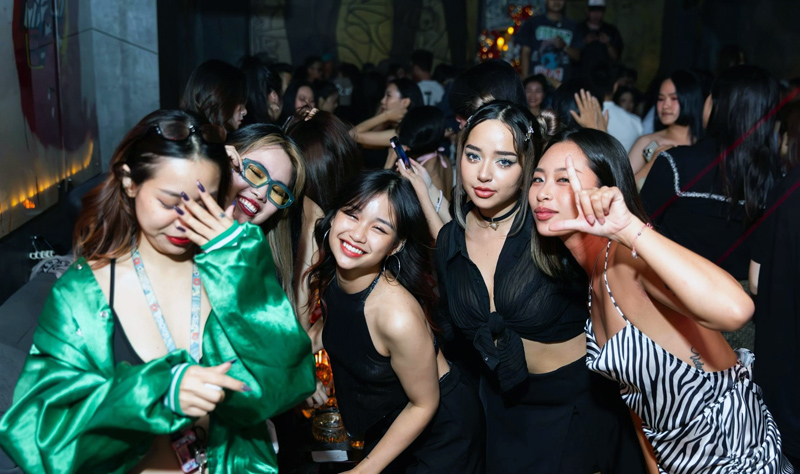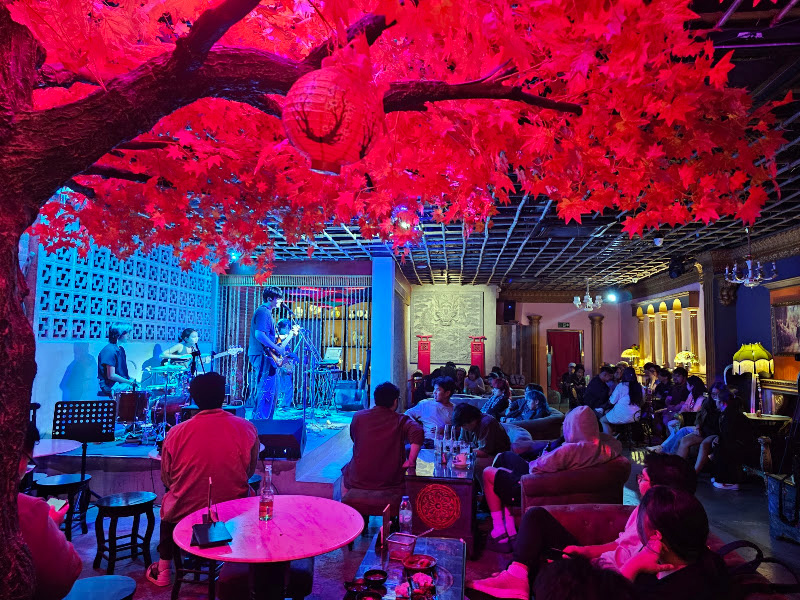
Manila becomes much more interesting once you stop treating it as a collection of monuments connected by traffic jams. The historical sights matter, but Metro Manila is also full of peculiar old shopping centres, specialist hobby districts, independent bookstores, serious listening bars, retro bowling alleys, creative enclaves, private karaoke rooms and club scenes that bear very little resemblance to the polished nightlife sold by international hotel chains.
That last geographical distinction matters. “Manila” in normal travel conversation usually means Metro Manila, so this guide moves through the City of Manila, Makati, Pasay and Quezon City rather than pretending they form one easily walkable centre. Crossing the metropolis at the wrong hour can consume an astonishing proportion of your natural lifespan, so the intelligent approach is to group places geographically and let each district occupy part of the day.
The idea is not to reject Intramuros, Binondo or the National Museum because other tourists have discovered them. It is to combine those places with the Manila that survives between the landmarks: slightly eccentric, enthusiast-driven, sometimes shabby, musically obsessive and considerably less interested in presenting itself as a destination.
First, One Correction About Manila Bay
Manila Bay is famous for its sunset, not its sunrise. An early walk along Roxas Boulevard or Baywalk can still be pleasant because the air is cooler and the city has not yet reached full operating temperature, but if you are choosing one photographic moment, come back in the late afternoon and watch the sun drop across the bay.
The same applies to The Bayleaf Intramuros. Its Sky Deck provides a 360-degree view over old Manila and works particularly well toward sunset, when the roofs and walls of Intramuros begin to soften under the evening light. There are few cities where watching the sun descend can be described as useful logistical planning, but Manila traffic has always encouraged stationary entertainment.
Start a Manila Morning at The Curator
If you are beginning in Makati, The Curator Coffee & Cocktails in Legazpi Village is a particularly good first stop. It helped establish Manila’s serious specialty-coffee and cocktail culture long before every new development acquired an exposed-brick café and began describing itself as artisanal.
The useful part is that The Curator still opens early for coffee, long before its cocktail personality takes over later in the day. Have coffee and something light, then leave Makati for old Manila before traffic becomes truly vindictive. Do not, however, rely on optimistic estimates claiming that Makati to Intramuros always takes twenty minutes; Metro Manila travel times are aspirations rather than physical laws.
Do Intramuros on a Bamboo Bike
Intramuros is hardly undiscovered, but the conventional method of exploring it can become a hot procession between churches, fortifications and tour groups. Bambike offers the more enjoyable version: guided tours through the walled city on bicycles built around bamboo frames, including routes that take in Fort Santiago and longer sunset or evening options.
The important distinction is that this is a guided experience rather than simply renting a bike and disappearing through the back streets. That is not much of a compromise because the historical context improves the ride, while covering the area by bicycle avoids turning a few kilometres of colonial architecture into an endurance event conducted at tropical temperature.
If the schedule works, late afternoon is excellent. Otherwise do the ride in the morning and save sunset for another part of old Manila.
Cross Into Binondo for Lunch
Intramuros and Binondo belong together geographically, and Chinatown provides a much better lunch strategy than returning immediately to Makati. Ongpin Street and the surrounding lanes remain packed with Chinese-Filipino restaurants, bakeries and snack shops where a meal can develop gradually through noodles, dumplings, siopao, lumpia, hopia and whatever else looks more persuasive than your original plan.
The correct approach is to order small portions and keep moving. Binondo punishes early commitment: finishing an enormous first meal before discovering four better-looking places twenty metres farther down the road is a traditional beginner’s mistake.
Food deserves its own Manila article, but Chinatown is too useful to remove completely from a things-to-do itinerary. Here, eating is the activity.
The National Museum Complex Is Actually Worth Your Time
The National Museum complex around Rizal Park consists of the National Museum of Fine Arts, National Museum of Anthropology and National Museum of Natural History, and general admission remains free. Trying to cover all three properly in ninety minutes would demonstrate admirable determination and almost no understanding of museums.
Choose whichever building interests you most, or sample two rather than sprinting through three. Fine Arts is the obvious choice for Filipino painting and sculpture, Anthropology provides a broader cultural perspective, while Natural History is worth entering even before you begin examining the collections because the restored building itself is impressive.
Rizal Park is immediately beside the complex, so this is one of the rare Manila itineraries where the next stop genuinely is a short walk rather than a phrase used optimistically by somebody looking at a map.
Ride the Pasig River Instead of Sitting Beside It in Traffic
One of Metro Manila’s genuinely underused pieces of public transport is the Pasig River Ferry. The service connects stations including Escolta in Manila and Guadalupe in Makati and remains free, providing both practical transport and a radically different visual angle on a metropolis normally experienced from road level.
This is not a luxury sightseeing cruise. You pass bridges, warehouses, residential areas, new riverfront works and parts of the city whose backs rather than their façades face the water. That is precisely why it is interesting.
Operations can be disrupted by heavy rain, strong winds, maintenance and major events, so check the day’s service before building an itinerary around it. When it is running, however, riding from the old centre toward Makati is one of the few occasions when Manila transport becomes part of the sightseeing rather than an obstacle to it.
Makati Cinema Square: Manila’s Mall That Refuses to Become Sensible
Officially it is Makati Central Square, but many residents continue to call it Makati Cinema Square, and the old name suits the building considerably better. Opened in the early 1980s, it feels nothing like the polished malls surrounding Greenbelt and Glorietta. Its corridors contain watch repairers, vinyl and audio shops, hobby businesses, second-hand goods, restaurants, airsoft equipment, bowling and shooting ranges with what appears to be little concern for conventional retail taxonomy.
Indoor ranges allow supervised target shooting with real firearms, while AMF-Puyat Superbowl continues to provide bowling and billiards in surroundings whose retro quality does not need to be manufactured by an interior designer. Elsewhere you can browse records and specialist equipment or simply wander around trying to work out how everything ended up inside the same building.
Do not come expecting curated nostalgia. Makati Cinema Square is better because it remains a functioning commercial ecosystem rather than a retro attraction charging admission to pretend it is still 1987.
It also becomes considerably more interesting after dark.
Fat Cat: Jazz Above the Mall
Fat Cat is one of the clearest examples of Manila’s current listening-bar culture. Hidden inside Makati Cinema Square, it takes inspiration from Japanese jazz kissaten: vinyl, a serious audio system, subdued lighting, strong cocktails and an atmosphere designed around actually hearing what is being played.
This is an excellent place to sit at the bar alone because the music provides the evening with a subject before anybody needs to invent one. Jazz and soul dominate much of the identity, and the relatively intimate room makes it better for conversation than places where communication depends on shouting biographical information directly into somebody’s ear.
Come early for a drink and stay until the decision becomes whether to continue quietly or go downstairs and abandon restraint altogether.
NoKal: The Basement Version of Manila
In the basement parking area of the same complex, NoKal provides almost the exact opposite experience. House, disco, funk, techno and vinyl-focused nights rotate through a club that feels considerably more interested in its dance floor than in providing ceremonial VIP theatre.
Programming varies, so there is little value in declaring it permanently a techno club or a house club. Check who is playing and choose the night accordingly. The attraction is that you can move from jazz on vinyl at Fat Cat to a basement dance floor without spending the intervening hour negotiating EDSA.
For a compact alternative night, the Fat Cat–NoKal combination is one of the smartest pieces of nightlife geography in Manila.
Add Little Tokyo While You Are There
Immediately beside Makati Cinema Square is Little Tokyo, a compact concentration of Japanese restaurants and groceries around Chino Roces Avenue. It is geographically convenient enough that there is no convincing excuse to eat somewhere mediocre simply because dinner happened to fall between your afternoon wandering and evening drinking.
Small izakaya, yakiniku restaurants, sushi counters and other Japanese places make the neighbourhood particularly comfortable for eating alone. Take a counter seat, order grilled food and a beer, and nobody will organise a committee to investigate why you arrived without companions.
Makati Cinema Square, Little Tokyo, Fat Cat and NoKal can therefore occupy an entire afternoon and evening while requiring remarkably little time inside a vehicle. In Manila, that almost qualifies as urban planning.
Cartimar: For People Who Actually Have Hobbies
Cartimar in Pasay is another survivor from an older Metro Manila. The complex dates back to the 1950s and built its reputation selling imported goods long before international brands arrived in every modern shopping mall.
Today it remains unusually specialised. Cycling shops sell everything from ordinary parts to serious enthusiast equipment, while other sections deal in sneakers, sportswear, plants, Asian groceries, pets, aquariums and aquascaping supplies. Blue Wonder Coffee provides a useful pause if several hours examining things you had no intention of buying begins to affect your judgment.
Do not oversell Cartimar as some secret tourist attraction. Its appeal is that it is not one. People come because they need bicycle components, aquarium equipment or a particular pair of shoes, and anyone interested in urban subcultures gets to watch those different communities operate side by side.
Cubao Expo: Vintage Manila Without the Costume Department
Cubao Expo began life as the Marikina Shoe Expo and has gradually become one of Quezon City’s most durable creative enclaves. The compact U-shaped complex mixes vintage shops, independent businesses, records, art, cafés, restaurants and bars in surroundings that remain rough enough around the edges to prevent anyone mistaking it for a lifestyle development designed by committee.
Come in the late afternoon, browse without an agenda and remain into the evening. Old cameras, comics, records, clothes and miscellaneous objects of uncertain provenance fill the shops, while the crowd changes as people arrive for drinks and music.
Cubao Expo is no longer an underground secret, and describing it as one would be silly. It is simply one of the better places to see Manila’s independent creative scene occupying a physical space that still feels human in scale.
Good Vibrations Records: Stay for the Music
Good Vibrations Records adds another reason to linger at Cubao Expo. Part record shop, part café and listening space, it runs listening sessions and music-focused events while maintaining the basic pleasure of allowing people to browse physical records in an era determined to reduce all culture to something accessed through a subscription screen.
It is particularly good if you are out alone because there is already something to do. Dig through the crates, listen to what is playing, order a drink and allow conversation to happen if it happens. Socialising works better when the environment provides a subject other than the fact that two strangers currently occupy adjacent furniture.
Maginhawa for the Slower Side of Quezon City
Maginhawa Street and the surrounding Diliman neighbourhood provide another useful contrast with Makati. Independent cafés, small restaurants and casual bars are distributed through residential streets whose atmosphere feels much less corporate than the central business districts.
This is a place for unstructured wandering rather than a checklist. Choose cafés because they look interesting, stop when something smells good and accept that turnover among small businesses means last year’s definitive list may already contain several ghosts.
Cubao Expo and Maginhawa can share the same Quezon City day, but they are not next door. Metro Manila frequently places things in the “same general area” while still requiring transport between them. Geography here possesses a sense of humour.
Solidaridad: A Bookshop With Actual Intellectual History
On Padre Faura Street in Ermita, Solidaridad Bookshop remains one of Manila’s most important independent literary institutions. Founded by National Artist for Literature F. Sionil José in the 1960s, it became closely associated with Filipino literature, political writing and intellectual life.
Ownership changed in 2025, but the shop continued operating with preservation of its literary identity part of the transition. The shelves remain particularly useful for Filipiniana and locally published work.
Buy something by a Filipino writer you have never read. It weighs roughly the same as a souvenir and has a greater probability of remaining interesting after you return home.
Manila’s Listening-Bar Culture Deserves a Night of Its Own
One of the strongest additions to Manila nightlife in recent years is the spread of bars where the sound system and record selection are treated as seriously as the drinks. These rooms are especially useful if you are travelling alone because they provide a reason to occupy the bar without performing the awkward ritual of pretending to be fascinated by your phone.
OTO in Poblacion is the defining example. The small, dim room revolves around vinyl, an audiophile system, guest selectors, Japanese spirits and well-made cocktails, and its limited size makes arriving earlier considerably wiser than attempting to materialise at midnight with six new friends.
Mono by Phono, on Pililia Street on the edge of the Poblacion orbit, pushes the listening-room idea farther toward a hi-fi club. Programming moves through jazz, soul, downtempo, post-punk, electronic music and more experimental territory, with guest selectors and occasional bring-your-own-vinyl sessions. This is the kind of bar where asking what is playing is a perfectly normal conversation rather than evidence that you have run out of material.
Fat Cat completes the triangle with its jazz-focused identity at Makati Cinema Square. Together they demonstrate that Manila nightlife is substantially more sophisticated than the old binary choice between giant clubs and tourist bars.
Poblacion After Dark
Poblacion remains the easiest district for independent nightlife because a large number of genuinely different venues sit close enough to walk between. That matters more than it sounds. A bad choice elsewhere in Metro Manila can involve another taxi; a bad choice in Poblacion usually requires turning a corner.
Run Rabbit Run is a strong cocktail-first option, particularly if you want to sit at the bar rather than begin immediately with a dance floor. The Spirits Library provides a more elaborate spirits-focused room, while OTO turns the attention toward music.
None of these requires you to approach the evening as a social engineering exercise. Take a bar seat, talk to the bartenders, pay attention to the room and conversations tend to become easier than in a giant club where everybody arrived inside their own group and has purchased enough real estate around a table to defend it militarily.
Manila’s Underground Dance Floors
For electronic music, Apotheka, The Void and NoKal represent three useful versions of Manila’s smaller club scene. Apotheka mixes house and other electronic styles with broader club programming and rotating collectives, so check the specific night rather than assuming one permanent genre.
The Void takes the stripped-back approach much farther. Tucked away on Doña Carmen Street, it is essentially a dark room organised around house and techno, with very little interest in providing decorative distractions. If your definition of a nightclub requires fountains, chandeliers and six employees carrying illuminated bottles through the crowd, disappointment is likely to be immediate and possibly therapeutic.
NoKal, back at Makati Cinema Square, sits somewhere between the two: an underground setting with a serious sound system, regular house, disco and techno programming and enough variation that the schedule matters.
These rooms tend to become social around their edges as much as on the dance floor. Smoking areas, stairways and quieter corners provide the obvious opportunities to talk between sets, though the sensible rule remains the universal one: if somebody wants to have a conversation, you will generally notice; if they do not, you should notice that too.
Problem Child and the New Cocktail Manila
Manila’s cocktail scene has developed enough depth that simply listing speakeasies behind false doors no longer qualifies as insider knowledge. Problem Child, which opened in late 2025, became the highest-ranked Philippine entry in Asia’s 50 Best Bars 2026, but it remains considerably more interesting than the award language suggests.
Its menus revolve around changing themes, the atmosphere gets louder later in the evening and the room sits outside the conventional tourist bar circuit on Jupiter Street. Come earlier if cocktails are the priority; come later if you want more energy.
Nearby Salcedo Village has the older and quieter 78-45-33, a deliberately restrained jazz cocktail bar where the music stays on vinyl and conversation remains possible. It makes an excellent antidote to the assumption that Manila nightlife has to operate at a volume normally associated with aircraft maintenance.
Sari Sari: Live Music Behind an Unassuming Entrance
Sari Sari on Washington Street occupies another interesting corner of Makati’s alternative scene. Hidden behind its street-facing concept, the bar mixes cocktails with live performances that can range across Filipino bands, tribute nights and other independent programming.
The exact schedule matters more than the venue name, so check what is happening before going. On the right night it works as a bridge between cocktail bar and small live venue rather than fitting neatly into either category.
That ambiguity is increasingly characteristic of Manila’s better nightlife. A bar becomes a listening room, a restaurant hides a gig space and a dead-looking shopping centre contains a jazz bar above a nightclub below. Categorisation is clearly somebody else’s problem.
Natural Wine, but Correct the Geography
Bombvinos is worth knowing if natural wine interests you, but the useful current reference point is Bombvinos Bodega in Makati rather than an alleged Quezon City outpost. The Bodega combines bottles, bar service and Filipino food in an approachable format that is less ceremonial than traditional wine bars.
That makes it another sensible early-evening option when you want drinks without committing immediately to Poblacion. Natural wine still occasionally attracts vocabulary suggesting the contents were personally liberated from an oppressive vineyard, but the atmosphere is relaxed enough that you can simply drink it.
A Poblacion Night Without a Taxi
If you want a compact route, begin at OTO for vinyl and cocktails, then continue on foot toward Apotheka or The Void depending on the night’s programme. Run Rabbit Run and The Spirits Library provide obvious alternatives if the first stop is full or if dancing suddenly seems less attractive than another drink at a bar.
Mono by Phono is close enough to the broader Makati nightlife circuit to combine with Poblacion, but do not force the idea of a completely walkable route if conditions or your starting point make a short ride more sensible. Manila already produces enough avoidable inconvenience without turning urban nightlife into an endurance sport.
The key is to choose one cluster. A night built around Poblacion works. A night built around Makati Cinema Square works. An itinerary that alternates between Poblacion, BGC, Quezon City and Malate because somebody compiled a “Top 10 Bars” list does not.
Karaoke Is Not an Ironic Activity Here
Karaoke is sufficiently embedded in Filipino social life that it should be treated as basic cultural infrastructure. Music 21 Plaza continues to operate conventional private-room karaoke venues, including branches around Makati and Malate, and there are countless smaller KTV businesses across the metropolis.
Hiring a room alone may sound mildly deranged until you remember that singing badly in private remains objectively less strange than doing it in front of an office department. Food and drinks can normally be ordered into the room, removing most reasons to leave until your interpretation of Bon Jovi has completed its natural cycle.
One useful terminology warning: KTV in the Philippines can mean completely ordinary private-room karaoke, but in some contexts it can also describe hostess-oriented adult nightlife. The letters alone tell you less than newcomers sometimes assume.
Try Filipino Hilot Rather Than Generic Hotel-Spa Massage
For actual physical recovery, Mont Albo Massage Hut remains an accessible introduction to Filipino-style treatments around Metro Manila. Its Hilot massage uses virgin coconut oil and warmed banana leaves, while bentosa cupping can be added separately.
There is no need to invent mystical properties for the treatment. The attraction is that it is recognisably Filipino rather than the same generic spa menu reproduced internationally beneath different quantities of beige stone.
It also provides a useful distinction because professional massage businesses and adult-oriented massage venues coexist in parts of Makati, Ermita and Malate. If all you want is your shoulders repaired after carrying luggage and sitting in traffic, established professional spas remove almost all of the ambiguity.
Manila’s Adult Side: Visible, but a Different Guide
P. Burgos Street remains the obvious adult-entertainment concentration around Makati, immediately beside mainstream Poblacion nightlife. Malate and Ermita retain elements of their older adult scene around M.H. del Pilar and neighbouring streets, although the area is substantially diminished from its historic peak.
Adult-oriented massage businesses and hostess venues remain part of that environment, but this is where the normal guide should stop. Venue formats, KTV mechanics, pricing, freelancers, hotel policies, practical etiquette and what different establishments actually offer belong in a dedicated Manila After Dark guide.
For the mainstream visitor, the useful distinction is simple: Poblacion and Burgos are geographically close but culturally very different nightlife environments. You can cross from one into the other almost without noticing until the business model changes rather abruptly.
Three Manila Recommendations That Should Be Retired
Some urban-exploration ideas survive online long after the experience that created them has disappeared. The old PNR railway around Tutuban is one. Metro Manila passenger services from Tutuban were suspended in 2024 for construction of the North-South Commuter Railway, so recommendations about watching active passenger trains slowly thread between homes describe an earlier city.
The Mountain Dew skate park at Circuit Makati is another obsolete recommendation. Its later incarnation closed as the riverside part of Circuit was redeveloped, so it should not appear in a current Manila itinerary simply because old photographs remain persuasive.
The Port Area is more nuanced. Manila’s maritime economy is enormously important and there are institutions serving the country’s vast seafaring workforce, but South Harbor remains a working port district rather than a casual urban attraction. Unless you have a specific destination or local reason to go, do not convert industrial infrastructure into an improvised sightseeing experiment.
If You Have Only One Full Day
Start early in Makati with coffee at The Curator, then head for Intramuros and take a Bambike tour before the heat becomes oppressive. Cross toward Binondo for lunch and spend enough time around Ongpin Street to turn the meal into a walking food crawl rather than one enormous sitting.
Continue to the National Museum complex and choose one or two buildings rather than attempting all three at competitive speed. From there, walk through Rizal Park and either head toward Manila Bay for sunset or use the Sky Deck at The Bayleaf if you want the city from above.
For dinner, Sarsá in Legazpi Village remains a reliable return to Filipino cooking in Makati. Afterwards, forget the original suggestion of walking five minutes from Poblacion to Arko Karaoke Hub: that venue is in Manila proper, not Poblacion. Instead, begin with Run Rabbit Run or OTO and continue to Apotheka or The Void if you still want the evening to get louder.
It is a full day, but at least the geography makes some sense.
Festivals: Good Advice, Wrong City
Sinulog and Pahiyas are both excellent Philippine festivals. Neither is a Manila festival.
Sinulog takes place in Cebu City in January, while Pahiyas is held in Lucban, Quezon, every May. They are worth planning separate trips around, but inserting them into a Manila guide would be roughly equivalent to recommending Oktoberfest as a useful seasonal event in Berlin.
Metro Manila has plenty of its own festivals and religious celebrations, but those deserve to be selected according to the actual dates of a trip rather than importing the country’s most famous events because they happen to be colourful.
Practical Manila Rules That Actually Help
Manila responds well to basic courtesy. A smile, a thank you and even a simple Magandang araw are appreciated, but there is no need to perform cultural enthusiasm like somebody auditioning for a tourism advertisement. People will generally recognise the effort without requiring a language recital.
Keep your phone and wallet under control in crowded markets, stations and jeepneys, use ordinary caution on poorly lit streets late at night and call a Grab rather than wandering around simply because two districts look adjacent on a map. The point is not that Manila is uniquely dangerous; it is that density, traffic and unfamiliar geography make small mistakes unnecessarily inconvenient.
And if somebody invites you to karaoke, go.
You have already surrendered enough dignity by travelling internationally. One song will not materially worsen the situation.
Alternative Manila: The Bottom Line
The most interesting version of Manila is not hidden. It is simply scattered between institutions that rarely appear together in conventional itineraries: a retro mall containing firing ranges and vinyl shops, bamboo bikes inside Spanish walls, hobby markets, independent bookstores, ferries, jazz listening rooms, natural-wine bars, basement clubs and karaoke rooms.
The newer nightlife is particularly revealing. OTO, Mono by Phono, Fat Cat, NoKal, Apotheka, The Void, Problem Child and the rest of the independent Makati scene show a city that has moved far beyond the outdated image of nightlife being divided between giant bottle-service clubs and Burgos Street.
See Intramuros, Binondo and the National Museum. They deserve to be seen. But also ride the river, spend an afternoon inside a mall that seems immune to redevelopment, buy a Filipino novel, listen to jazz through an absurdly serious sound system and discover why one of Manila’s best club nights is happening beneath a car park.
The polished version of the city is easy to find.
The more interesting one usually requires going downstairs.