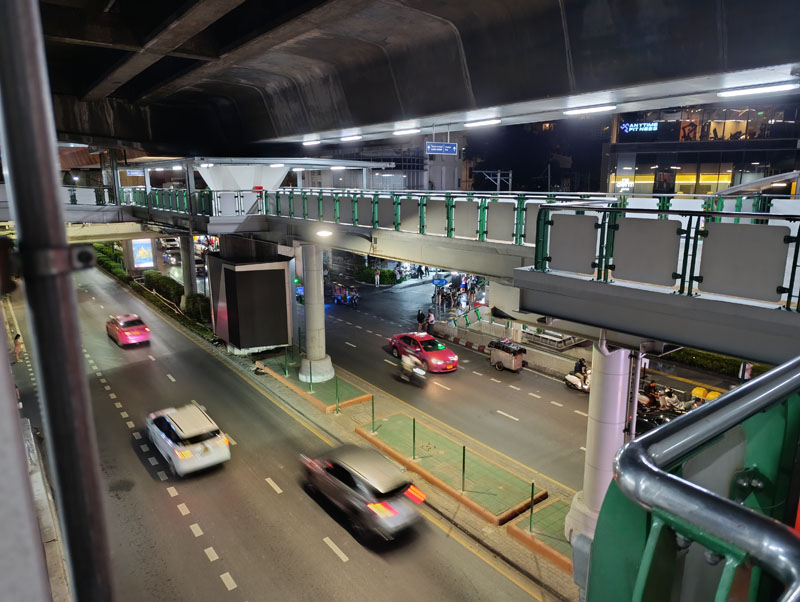
Bangkok is not particularly difficult to visit. It is simply very good at punishing bad planning because the city is enormous, traffic can turn a short distance into a minor life event, the weather affects how much ground you realistically want to cover, and choosing the wrong part of town can add a surprising amount of travelling to every day. At the same time, public transport is useful, food is everywhere, getting online is easy and very little requires elaborate preparation.
For a first visit, the main challenge is not deciding whether the Grand Palace, Chinatown or Chatuchak deserve a place on the itinerary. It is understanding Bangkok well enough that you do not spend half the trip travelling between them. Once the geography starts making sense, the city becomes considerably easier.
Bangkok Does Not Really Have One City Centre
One of the first ideas worth abandoning is that Bangkok has a compact centre containing most of the places visitors want to see. Historic Bangkok sits around Rattanakosin and the Chao Phraya River, with the Grand Palace, Wat Pho and many of the major temples. Chinatown spreads around Yaowarat farther southeast. Siam is one of the main commercial hubs of modern Bangkok, while Silom and Sathorn combine offices, hotels, restaurants and nightlife. Sukhumvit then stretches east through a long succession of neighbourhoods, each with its own restaurants, bars, hotels and local rhythm.
All of these can reasonably be described as central Bangkok. That does not mean they are conveniently close to one another. The Grand Palace, Chatuchak Market, lunch on Sukhumvit and sunset beside the river may all be perfectly sensible ideas individually. Combining them simply because Google Maps has managed to display everything on the same screen is less sensible. Bangkok works much better when you think in areas rather than attractions.
Get the Formalities Sorted Before You Fly
Foreign visitors currently need to complete the Thailand Digital Arrival Card, usually shortened to TDAC, before entering Thailand. It is an online arrival form, not a visa, so entry and visa requirements still depend on your nationality and circumstances. The form asks for basic passport, travel and accommodation information, so there is no good reason to leave it until you are standing somewhere inside an airport attempting to remember the address of your hotel.
Beyond that, first-time visitors do not need an elaborate Bangkok preparation ritual. Make sure your cards work abroad, have access to mobile data, know where you are staying and install whatever navigation and ride-hailing apps you expect to use. There is considerably less value in designing a minute-by-minute itinerary. Bangkok will eventually introduce traffic, weather, hunger or somewhere more interesting than the place you intended to go next. The spreadsheet will lose.
Check Which Bangkok Airport You Are Actually Using
Bangkok has two major airports: Suvarnabhumi Airport (BKK) and Don Mueang International Airport (DMK). Suvarnabhumi handles a large proportion of international traffic and is connected to central Bangkok by the Airport Rail Link, taxis, ride-hailing and other public transport. Don Mueang is heavily used by low-cost and regional airlines and has its own train, bus, taxi and ride-hailing connections.
For most travellers, neither airport is particularly difficult. The important part is noticing which one appears on your ticket, particularly if you book separate flights and need to transfer between BKK and DMK. They are on opposite sides of a very large city with traffic that has no interest in your connection time.
For a normal arrival, decide how you are getting to your hotel before landing. You do not need to memorise every transport option, but knowing whether you are taking the train, a taxi or a ride-hailing car is much more pleasant than researching it beside the baggage carousel after a twelve-hour flight.
Choose the Area Before You Choose the Hotel
Bangkok regularly offers better hotels for less money than many other major cities, which makes it easy to become distracted by swimming pools, room sizes and suspiciously attractive booking-site discounts. Location usually matters more.
If most of your evenings will be around Sukhumvit, staying far across Bangkok because another hotel has a nicer rooftop pool can become tedious very quickly. Someone primarily interested in temples, the river and historic Bangkok has different priorities from someone planning restaurants, shopping and nightlife around Sukhumvit, Silom or Sathorn.
Being close to a BTS or MRT station is useful, but the name of the station matters at least as much as the walking distance. Bangkok’s rail network stretches for many kilometres across several lines, so a hotel can genuinely be two minutes from the BTS and still be inconvenient for the trip you actually have in mind.
For a first visit focused on nightlife, restaurants and easy access to the parts of Sukhumvit that many Lonely Punter readers are likely to use, Nana, Asok and Phrom Phong are useful reference points. Staying close to one of these stations puts you within a practical stretch of Sukhumvit, with nightlife, restaurants, shopping and convenient connections to the rest of the city.
Move farther east to Thong Lo and you are still in an excellent neighbourhood, but the logic changes. Thong Lo has strong mainstream nightlife, bars, clubs and restaurants, yet it is not the same base as Nana or Asok if the adult-oriented side of Bangkok is part of your plans. The hotel may still be beside the BTS, but you will spend more time travelling back and forth.
Khao San Road is one of the most common first-time mistakes for this type of traveller. It is famous, cheap and heavily associated with Bangkok nightlife, which makes it look like an obvious place to stay if you do not know the city. In reality, it caters much more to backpackers and younger travellers, sits outside the BTS network and is awkwardly placed for Sukhumvit and many of the areas a Lonely Punter reader is likely to use in the evening. It is worth visiting if you are curious. Basing your whole trip there is a different question.
The point is not that one district is universally better than another. It is that “near BTS” becomes useful information only once you know which BTS station, what kind of Bangkok you want outside the hotel and where you expect to spend your evenings. The dedicated Where to Stay and transport guides can deal with the details. For a first trip, choose the area first and the hotel second.
Learn How Bangkok Transport Fits Together
Bangkok has BTS Skytrain lines, MRT metro lines, suburban rail, river boats, buses, taxis, motorcycle taxis, tuk-tuks and ride-hailing services. You do not need to master all of them.
For most visitors, BTS and MRT handle many of the useful journeys through modern Bangkok while removing traffic from the equation. River boats become particularly useful around historic Bangkok and can occasionally turn the journey itself into part of the day. Taxis and ride-hailing fill many of the gaps, especially when the rail network does not take you conveniently where you need to go.
The different systems are not completely unified, so do not assume that one transport card automatically works across every train, boat and bus in the city. Also remember that Bangkok’s rail systems are not an all-night network. If you are out late, getting back to the hotel may involve a taxi or ride-hailing even if you arrived by BTS.
Tuk-tuks are worth using once if you want the experience. They are rather less convincing as the backbone of a serious urban transport plan. Agree on the fare first, and become suspicious if an improbably cheap journey suddenly develops a strong interest in taking you shopping.
A dedicated transport guide can deal with lines, tickets, airport connections and the details. For a first trip, the useful lesson is simpler: use trains whenever they make geographical sense and road transport when they do not.
Plan by Area, Not by Ambition
Bangkok is one of those cities where saying something is “only six kilometres away” provides remarkably little useful information. At quiet times, a taxi journey can be quick. During heavy traffic, the same journey can become an extended study of the rear bumper in front of you.
That makes geographical planning far more important than squeezing another attraction into the day. If you are visiting the Grand Palace and Wat Pho, spend time around the river and historic districts rather than returning to Sukhumvit for lunch because a restaurant appeared on somebody’s list. If you are exploring Chinatown, see what else makes sense around Yaowarat and the nearby MRT stations. If you are spending the afternoon around Siam, there is little reason to cross the entire city between every activity.
This is especially important if you intend to go out at night. Bangkok can easily fill both your days and evenings. It does not also need you spending several hours commuting between them.
The Weather Has More Influence Than Your Itinerary
Bangkok is hot for most of the year, and humidity here is not merely an abstract number displayed by a weather app. A walking-heavy plan that appears perfectly reasonable while sitting at home can feel substantially less intelligent at 1 p.m. after two temples, several kilometres of pavement and the discovery that Bangkok shade rarely appears exactly where you need it.
When practical, start outdoor sightseeing earlier. Use the hottest part of the day for lunch, museums, shopping centres, cafés or anything involving effective air conditioning, then head outside again later.
Rain brings a different problem. Heavy tropical downpours can arrive quickly, and prolonged rainfall can create local flooding and serious traffic delays. This usually calls for flexibility rather than panic: wait it out, change the order of the day or use rail transport where possible. Bangkok rarely rewards people who insist that the schedule must continue exactly as written.
Cash Still Has a Job
Bangkok has card terminals, banking apps, QR payments and shopping centres where you could survive for days without touching a banknote. You should still carry cash.
Hotels, larger shops, established restaurants and many modern businesses commonly accept cards. Street food vendors, markets, small restaurants and other everyday businesses may still be easier to deal with in cash. Thai QR payments are also extremely common, including at many places where an international credit or debit card may not be useful.
Foreign visitors now have a practical way to access that payment system through TAGTHAi Easy Pay, a tourist e-wallet designed for international visitors. Once activated, it allows users to scan compatible Thai PromptPay QR codes through the TAGTHAi app and pay much like a local user would. Activation currently involves registering the wallet through participating KBank foreign-exchange facilities, so there is a little more involved than simply downloading an app, but it can be genuinely useful if you expect to make regular QR payments.
Cash therefore still has a job. Keep enough baht for ordinary spending and try to have smaller notes available, but do not assume cash and international cards are your only options. ATM fees, exchange rates and the details of setting up services such as TAGTHAi Easy Pay deserve their own current guide rather than several paragraphs here.
Do Not Turn Eating Into Project Management
Bangkok is a poor city in which to arrive with every meal already scheduled. Some restaurants are absolutely worth reserving, particularly at the higher end, but much of the pleasure of eating in Bangkok comes from being flexible enough to notice what is around you.
Street stalls, food courts, markets, shophouse restaurants and neighbourhood places appear throughout the city, often concentrated around transport stations and working districts. A famous restaurant can be excellent. So can the place you enter because a queue of office workers has formed outside and you have just realised lunch should have happened two hours ago.
Bangkok’s food culture is far broader than the familiar tourist sequence of pad thai, green curry and mango sticky rice. Regional Thai food, Chinese-Thai cooking, seafood, noodles, grilled meat, southern curries and modern restaurants all coexist across the city.
There are dedicated food guides for deciding what to eat and where to look for it. For your first visit, the important thing is to leave enough space in the schedule to actually discover some of it.
Temples Require a Little More Planning Than Turning Up
Bangkok’s major temples and royal sites are active religious and ceremonial places, not attractions with decorative monks added for atmosphere. Dress requirements matter, particularly at the Grand Palace and Wat Phra Kaew, where inappropriate clothing can prevent entry. Royal ceremonies and official events can also affect access, so check current information before making a special journey.
You should also ignore unsolicited claims that a major attraction is unexpectedly closed until you have verified them yourself. The famous “Grand Palace is closed” routine has been separating visitors from their intended itinerary for years. The usual next chapter involves a helpful tuk-tuk driver, an alternative tour and a strangely unavoidable visit to a tailor or jewellery shop.
At Buddhist sites, dress reasonably, remove footwear when instructed and follow whatever rules are posted. There is no need to turn basic good manners into an anthropology seminar.
Bangkok After Dark Is Not One Scene
Bangkok nightlife makes considerably more sense once you stop treating it as a single category. Sukhumvit contains mainstream bars, clubs, restaurants, rooftops and adult-oriented entertainment within a relatively compact corridor. Silom combines conventional nightlife with Patpong. Thonglor and Ekkamai lean toward more polished bars, clubs and local nightlife. Chinatown has developed a strong cocktail and evening scene. Khao San Road remains Khao San Road, which is either useful information or a warning depending on what you came looking for.
The adult-entertainment districts are part of Bangkok’s nightlife geography, but they are not the whole scene. A first-time guide only needs to acknowledge that they exist and explain where they fit into the city. For detailed information on how Bangkok’s adult entertainment scene actually works, including the main areas, venue types, common arrangements and practical considerations, Lonely Punter has a dedicated After Dark section.
What matters here is that where you stay affects how easily you can go out. A hotel that looks conveniently connected at 3 p.m. can become considerably less convenient after the trains stop running. If nightlife is an important part of the trip, factor it into the choice of neighbourhood rather than treating it as something you will solve every evening with a taxi.
Bangkok Is Remarkably Safe, but Small Scams Still Exist
Bangkok is, both in terms of perception and practical day-to-day experience, one of the safest major cities in the world for visitors. In the central, tourist and nightlife areas, walking around alone late at night rarely feels threatening, and that sense of security is generally justified. Unwanted confrontation from locals is unusual, including after a night out, unless you are actively creating the problem yourself.
For most travellers, the more realistic risks are minor financial traps rather than street crime. Bills in some nightlife venues can occasionally acquire extra enthusiasm, so it is worth checking what you are being charged rather than discovering the total after several rounds. Be especially cautious when a taxi or tuk-tuk driver enthusiastically recommends a bar, club, massage shop, tailor or other business and offers to take you there. These recommendations are often commission-driven, and that commission may eventually find its way onto your bill.
The same principle applies to shopping and supposedly exceptional deals. Jewellery, tailoring, tours or other offers that sound dramatically better than they should deserve a little scepticism. Theft and serious attempts to defraud visitors are comparatively uncommon in the parts of Bangkok most travellers normally use, while small attempts to extract a little extra money are much more plausible.
None of this requires paranoia. Normal street awareness is generally enough, and Bangkok is not a city where most visitors need to spend the evening worrying about who is walking behind them. If something does develop into a genuine problem, Thailand’s Tourist Police can be reached on 1155.
Do Not Try to Win Bangkok
First-time visitors often fall into one of two extremes. Some plan almost nothing and spend several days inefficiently crossing the city whenever something catches their attention. Others plan every hour and discover that Bangkok has not signed the itinerary.
A better approach is to give each day a geographical focus and leave gaps. Pick an area, identify one or two things you genuinely want to see, then allow food, weather, markets, unexpected stops and fatigue to influence the rest. Bangkok has enough density that unplanned time rarely stays empty for long.
This becomes even more important if nightlife is part of the trip. Starting an ambitious temple programme at 7:30 in the morning after getting back to the hotel at 4:00 is technically possible. So is sleeping on the BTS until somebody wakes you at the terminal.
What Is Actually Worth Organising Before Arrival?
Book accommodation, complete the required entry formalities, understand how you are getting from the airport to the hotel and reserve anything that genuinely sells out or matters enough that missing it would annoy you.
Then stop.
You do not need to pre-book every taxi, meal, market visit or normal attraction. You do not need a daily itinerary designed with the precision of a military operation. You certainly do not need to understand all of Bangkok before arriving.
The useful preparation is structural. Know where you are staying, understand roughly how the city is laid out, know which forms of transport are likely to be useful, decide which parts of Bangkok matter most to you and leave enough flexibility to change your mind once you are there.
The Main Thing to Understand on a First Trip
Bangkok becomes considerably easier once you accept that you are not going to finish it. There will always be another neighbourhood, market, restaurant, temple, bar or strange patch of city that you did not reach. Trying to eliminate that problem usually produces a worse trip rather than a more complete one.
Use the first visit to understand the geography, learn which transport works for which journeys and discover which version of Bangkok you actually enjoy. See the major sights you genuinely care about, eat whenever something looks promising and leave enough energy for the city after dark if that is part of the reason you came.
Bangkok does not need help filling your time. Your job is mostly to avoid wasting it.


