Manila is not an immediately easy city. It is enormous, fragmented, humid, traffic-heavy and considerably less interested in arranging itself around visitors than Bangkok or Singapore. That can make the first day feel chaotic, but it is also part of what makes the Philippine capital interesting: Spanish colonial walls, Chinese trading districts, American-era boulevards, enormous malls, Catholic churches, skyscrapers, street food and nightlife all coexist inside a metropolitan area that never seems particularly concerned with visual consistency.
One useful distinction before starting: Manila and Metro Manila are not quite the same thing. Intramuros, Binondo, Ermita and Malate are inside the City of Manila, while Makati, Bonifacio Global City, Quezon City and Pasay belong to other cities within the wider metropolitan area. Travellers generally call the whole thing Manila, and this guide does the same when practical. Geography purists may object, presumably while sitting in traffic between two municipal boundaries nobody else noticed.
Start with Intramuros
If you see only one part of historic Manila, make it Intramuros. The fortified city was established by the Spanish in the sixteenth century and became the political and religious centre of colonial Manila. Its walls, gates, plazas and surviving buildings provide the clearest physical connection with that period, despite the catastrophic destruction Manila suffered during the Second World War.
Intramuros is compact enough to explore on foot, although heat makes an early start sensible. Walk the walls where access is possible, pass Plaza de Roma and allow time for the churches, museums and old administrative buildings rather than rushing between photo stops. Horse-drawn calesas still circulate through the district, but the area makes more sense at walking speed, where the contrast between reconstructed structures and genuine survivors becomes easier to understand.
Fort Santiago and José Rizal
At the northern edge of Intramuros, Fort Santiago guarded the entrance to the Pasig River and later became one of the most important historical sites in the Philippines. Its history stretches from the Spanish colonial period through American rule and the Japanese occupation, and parts of the complex retain a considerably darker atmosphere than the landscaped courtyards initially suggest.
The fort is especially associated with José Rizal, the writer, doctor and nationalist whose execution in 1896 helped turn him into the country’s principal national hero. Rizal was imprisoned here before being taken to his execution near what is now Rizal Park, and the fort contains material devoted to his life and final days. Visiting Fort Santiago before the park makes the connection between the two places much more meaningful.
San Agustin Church and Manila Cathedral
San Agustin Church is the architectural highlight of Intramuros and one of Manila’s most important surviving colonial buildings. Completed around the beginning of the seventeenth century, it survived earthquakes, political upheaval and the destruction of much of Intramuros during the Battle of Manila. Its heavy stone exterior gives relatively little warning of the elaborate interior, where painted ceilings, carved details and religious art reveal a much richer space.
The church forms part of the UNESCO-listed Baroque Churches of the Philippines, and the adjoining museum is worthwhile even if your enthusiasm for ecclesiastical collections normally lasts approximately seven minutes. A short walk away, Manila Cathedral occupies Plaza de Roma and has itself been destroyed and rebuilt repeatedly. The current cathedral dates largely from the post-war reconstruction period, making the two churches an interesting pair: one survived Manila’s disasters, the other demonstrates how often the city has had to rebuild after them.
Rizal Park and the National Museum Complex
Immediately south of Intramuros, Rizal Park, also known as Luneta, occupies one of the most historically significant public spaces in the country. Rizal was executed nearby in 1896, and his monument and remains now form the symbolic centre of the park. It is less about spectacular landscaping than understanding how strongly Philippine national identity is tied to particular people and places.
The surrounding National Museum Complex deserves substantially more time than many visitors give it. The National Museum of Fine Arts, National Museum of Anthropology and National Museum of Natural History collectively cover art, archaeology, ethnography and the natural environment of the archipelago, and general admission remains free. If the heat outside has started negotiating directly with your internal organs, this is also one of Manila’s better cultural excuses for several hours of air conditioning.
Binondo: Chinatown, Food and Trading History
Across the Pasig River, Binondo is generally described as the world’s oldest Chinatown, established in 1594. Unlike historic districts preserved primarily for visitors, it remains intensely commercial: gold shops, pharmacies, bakeries, restaurants, religious buildings and wholesale businesses compete for space along streets that can feel busy even by Manila standards.
Food is the obvious reason to linger. Walk Ongpin Street and the surrounding lanes looking for dumplings, siopao, noodles, lumpia, hopia and Filipino-Chinese dishes that show how thoroughly Chinese cooking has become embedded in Philippine food culture. Binondo works best as a food crawl rather than a formal lunch: order something small, walk another block, discover that you apparently require another snack, repeat until defeated.
The district is currently receiving renewed attention through heritage and streetscape projects, but its appeal is still the mixture of commerce and history rather than polished restoration. Binondo Church, Ongpin, Carvajal Street and nearby Escolta can easily occupy half a day if eating is treated with the seriousness it deserves.
Escolta and Divisoria
Close to Binondo, Escolta Street was once Manila’s grand commercial avenue, associated with department stores, cinemas and some of the city’s finest early twentieth-century architecture. Decades of decline followed as business moved elsewhere, but surviving Art Deco and Beaux-Arts buildings still make the area worthwhile for anyone interested in urban history rather than only monuments.
Nearby Divisoria operates according to an entirely different philosophy. This vast shopping district is crowded, noisy and built around cheap clothing, textiles, household goods, accessories and almost anything else capable of being stacked onto a stall. It is not relaxing and nobody has ever mistaken it for Greenbelt, but that is precisely the point. Bring cash, watch your belongings and regard bargaining as part of the transaction rather than a declaration of war.
Manila Bay and Roxas Boulevard
The Manila Bay waterfront has long been associated with one of the city’s classic pleasures: watching the sunset. Roxas Boulevard and the Baywalk offer broad views west across the water, and in good weather the sky can become absurdly theatrical around dusk.
The waterfront has also undergone repeated redevelopment, rehabilitation and construction, so individual sections can change more quickly than the sunset itself. Treat the area as part of a wider evening rather than the sole reason to cross the city. From here, Malate and Ermita sit inland, while the Cultural Center complex and the huge developments around Pasay extend farther south along the bay.
Makati: The Modern Counterpoint
To understand contemporary Metro Manila, spend some time in Makati. The city’s central business district is the opposite of Intramuros: office towers, landscaped commercial spaces, major hotels and some of the country’s most expensive real estate. Greenbelt and Glorietta dominate the shopping landscape around Ayala Center, but malls in the Philippines function as much as social and dining spaces as places to buy things, making them more relevant to daily life than the word “mall” might suggest elsewhere.
The Ayala Museum provides the cultural reason to come even if shopping is not your preferred recreational activity. Its collections and exhibitions deal with Philippine history, archaeology, art and indigenous cultures, while its famous historical dioramas compress centuries of political drama into miniature scenes with admirable efficiency. Visits currently use timed entry, so this is one place worth checking before simply appearing at the door.
Poblacion and Bonifacio Global City
North of Makati’s business district, Poblacion has become one of Metro Manila’s principal eating and drinking neighbourhoods. Small restaurants, cocktail bars, music venues and cafés occupy a dense grid of streets where it is possible to move between venues on foot — a surprisingly luxurious feature in a metropolis where crossing districts can consume a noticeable percentage of your lifespan.
Bonifacio Global City, usually called BGC, offers a much newer and more planned version of metropolitan Manila. Wide pavements, modern towers, restaurants, bars, public art and upscale shopping make it easy to navigate, although anyone arriving directly from Binondo may wonder whether the taxi has accidentally crossed an international border. BGC is useful precisely because of the contrast: Manila makes more sense once you have seen both its oldest districts and the places built almost entirely in the twenty-first century.
Shopping Is Practically an Urban Institution
It is difficult to discuss Manila without discussing malls. SM Mall of Asia in Pasay is enormous even by local standards, combining retail, food and entertainment beside Manila Bay, while Greenbelt, Glorietta and Rockwell’s Power Plant Mall represent the more polished end of the spectrum. BGC adds another concentration of modern shopping centres and high-end restaurants.
More interestingly, mall culture tells you something about the city itself. Air conditioning, security, restaurants, cinemas, supermarkets and long opening hours make these complexes practical social spaces in a hot, traffic-heavy metropolis. If you prefer markets, Divisoria and Binondo provide the opposite experience: little climate control, substantially more bargaining and a higher probability that you will return carrying something you did not know existed that morning.
What to Eat in Manila
Philippine food does not rely on the same chilli-heavy flavour profile as much of mainland Southeast Asia. Instead, many dishes revolve around combinations of salty, sour, sweet and rich flavours, often involving vinegar, soy sauce, garlic and slow-cooked meat.
Adobo is the obvious starting point, usually meat braised with vinegar, soy sauce, garlic and spices, although practically every household appears entitled to argue that somebody else’s version is incorrect. Kare-kare pairs meat and vegetables with a thick peanut sauce, usually balanced with salty fermented shrimp paste, while lechon provides the country’s great celebration of roast pork. For dessert, halo-halo piles shaved ice, milk and an improbable collection of sweet ingredients into something particularly convincing when Manila’s weather has become personal.
Street food goes farther. Look for grilled isaw, fish balls, orange-battered kwek-kwek, lumpia and the numerous small snacks sold near markets, stations and busy streets. Binondo deserves its own food guide because Filipino-Chinese cooking adds another layer entirely, and Manila’s modern dining scene stretches from casual neighbourhood kitchens to ambitious restaurants in Makati and BGC.
Manila After Dark
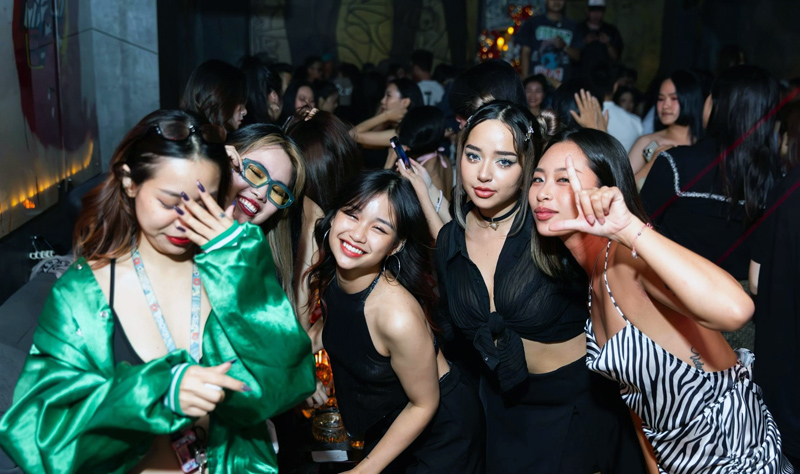
Manila’s nightlife is scattered across several cities and districts rather than concentrated into one obvious centre. Poblacion in Makati is the easiest choice for bar-hopping, restaurants and cocktails, while BGC offers more polished clubs, rooftops and upscale bars. Malate, once the principal nightlife district for foreign visitors, still has pubs, live music, KTVs and late-night venues around Remedios Circle and Adriatico Street, although it no longer dominates the scene as it once did.
There is also a substantial adult-entertainment sector. P. Burgos Street in Makati, on the edge of Poblacion, remains Metro Manila’s best-known concentration of go-go and hostess bars, while parts of Malate retain a smaller and rougher adult scene. That distinction is worth knowing because Poblacion’s mainstream nightlife and Burgos Street sit almost beside one another but serve rather different evenings. Venue systems, prices, KTVs, freelancers, massage, bar procedures and the practical realities of the adult scene belong in the dedicated Manila After Dark guide rather than here.
Getting Around Manila
Traffic is not a minor inconvenience in Manila; it is an environmental condition. Two places that look reasonably close on a map can require a surprising amount of time to connect, particularly around rush hour. The best general strategy is therefore to plan days geographically: Intramuros, Rizal Park and the National Museums together; Binondo, Escolta and Divisoria together; Makati and Poblacion together.
The LRT and MRT are useful where their routes align with your plans, and the LRT-1 now extends farther south through Parañaque than many older maps and guides suggest. Trains avoid road traffic but can become extremely crowded around commuting hours. Grab is generally the easiest door-to-door option for visitors, while ordinary taxis require more attention to meters and routing.
Jeepneys remain one of the defining images of Philippine transport and are extremely cheap, but routes are considerably less intuitive for a first-time visitor. Use them when you understand where they are going rather than boarding one purely because it appears culturally authentic. Becoming lost in traffic is still being lost.
When to Visit Manila
Manila is hot throughout the year, with the biggest seasonal distinction being rainfall rather than temperature. The Philippine weather service broadly defines December to February as the cooler dry season, followed by a hotter dry period from March to May. For most visitors, December through February provides the most comfortable conditions for extensive walking.
The rainy season generally runs from June into November, and tropical systems can bring severe rain and disruption to Luzon. That does not mean Manila becomes impossible for half the year, but flexibility matters more and flooding can seriously affect traffic. During the hottest months, sightseeing in Intramuros at midday can also become less a cultural activity than a test of hydration.
How Long Do You Need in Manila?
Two full days cover the essentials if you organise them intelligently. Spend one around Intramuros, Fort Santiago, Rizal Park and the National Museums, and another combining Binondo with whichever version of modern Manila interests you more — Makati, BGC or an evening in Poblacion.
Three or four days is better if you want the city rather than simply its headline attractions. That allows proper time for Binondo, Ayala Museum, shopping, nightlife and a slower look at districts such as Escolta, Malate or BGC without spending the entire visit calculating travel times. Manila is also the main gateway to much of the Philippines, but do not treat every island excursion as a “day trip from Manila” merely because domestic flights exist.
Manila: The Bottom Line
Manila rarely produces the instant affection of a neatly preserved historic capital. Too much of the old city was destroyed, the metropolitan area is fragmented and the traffic can turn an innocent restaurant reservation into a logistical exercise. Its appeal comes from something less orderly: the collision of Spanish, Chinese, American and Filipino influences inside a modern Asian megacity that keeps rebuilding itself.
Start with Intramuros and Binondo, because they explain where the city came from. Then move outward to Makati, Poblacion and BGC to see what Metro Manila has become. Eat properly, allow more time for journeys than seems reasonable, and resist the temptation to judge the place entirely from the road between the airport and your hotel. Manila improves considerably once you get out of the car.